
Montreal Dispatch # 3
The final one

This final dispatch was a bit delayed due to some other writing projects I had come up. So at long last I present the final dispatch from my trip to Montréal. I had many other exhibitions and experiences I wanted to write about, but I think I will wrap up with this final Montréal dispatch. I’m working on new writing which you will see in the coming weeks.
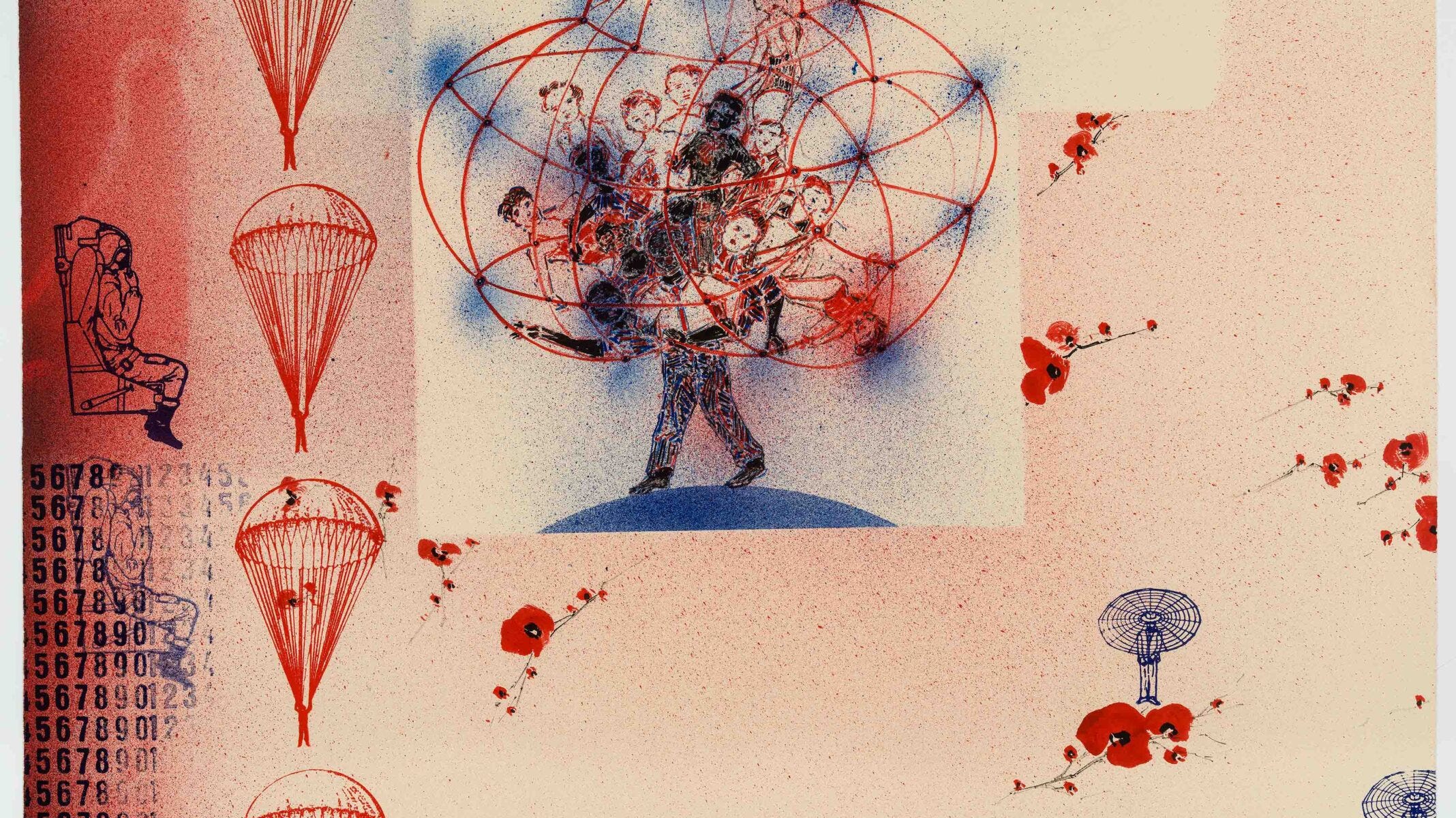
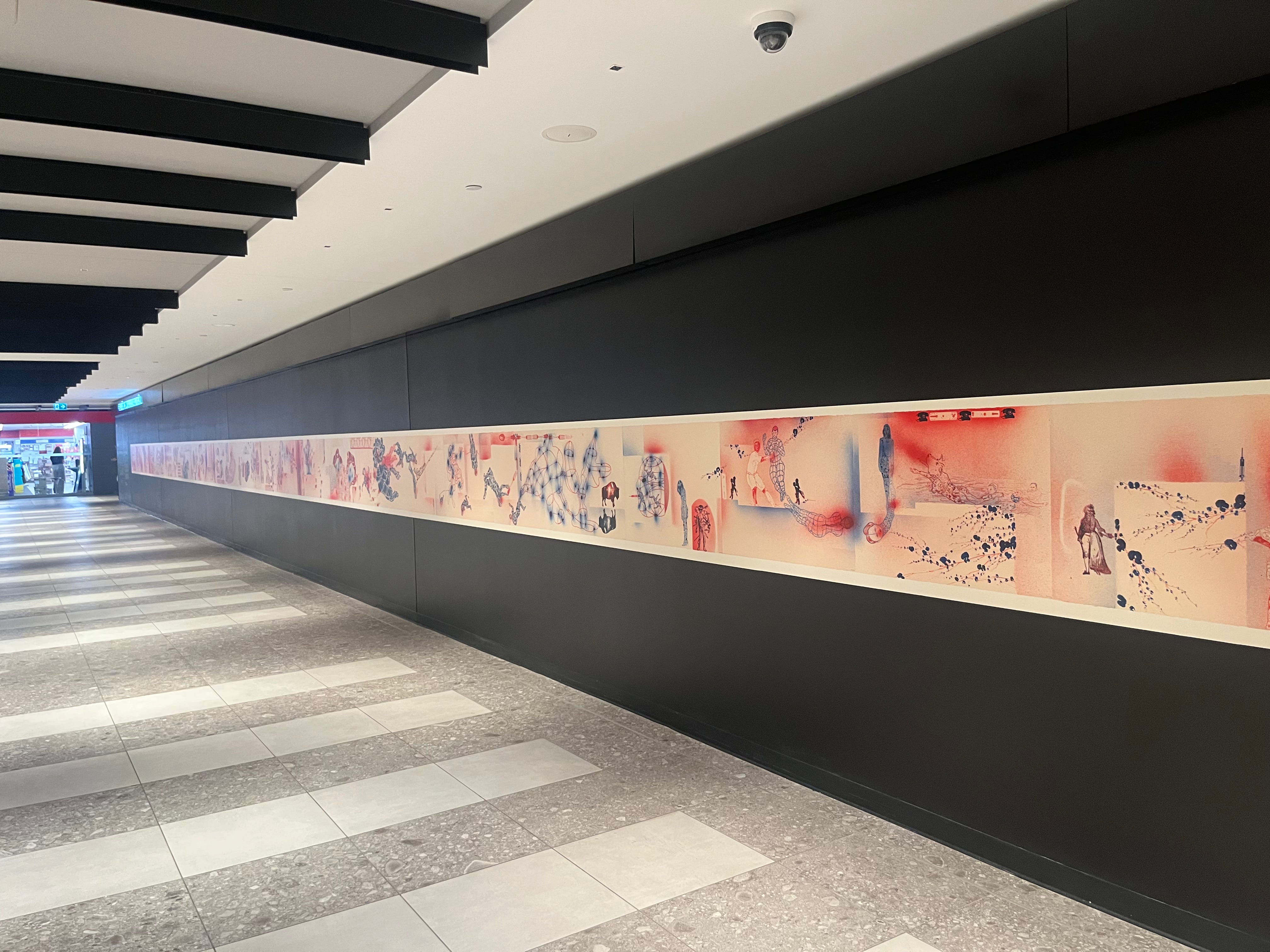
On the Wednesday before I left Montreal, I began my day at the Musée d’art contemperain de Montréal (MAC) where Francois Morelli has a long mural installed on the outside wall. The museum is undergoing renovations so the mural is accessible all days. Le chant de l’aube was created during the Covid lockdowns. The mural is a facsimile of the original sketchbook of Francois’s. The work unfolds as a private cartography that maps solitude and its airborne connection to the wider world. Improvisationally using rubber stamps and ink drawings, the work flows as a contemporary codex bringing in Mesoamerican story, explorer’s maps, automatic writing and dream fragments. His gestures are recorded in the fragmentary space of the pages.
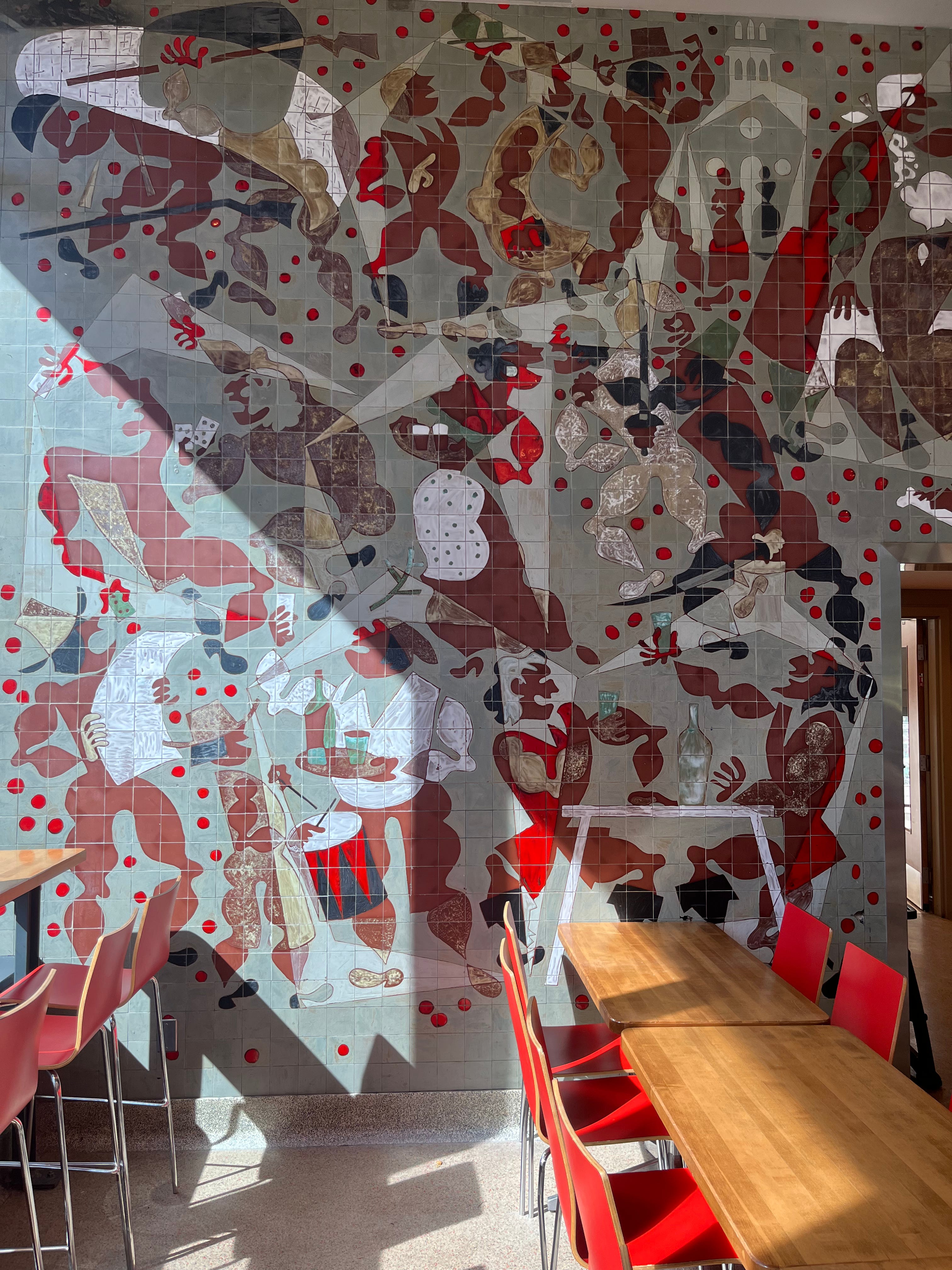
I then met Francois at his studio. I got to see some of the new work as well an archive of multi-disciplinary practice. We stopped at the Olympic Stadium built for the 1976 Olympics and then had tea at the botanical garden. Francois pointed out the tile mural in the cafe: Deux Murales: Histoire de la restoration à l’époque de la Nouvelle France from 1956 by Robert Lapalme. Francois talked about the influence that mural had on his early ideas of art. It is a testament to the importance of local art culture. Before we’re told what is the right thing to be influenced by, we are caught by what is not and the images get inside us. The mural’s take on French Canadian history is filtered through 1950’s modernism by way of Hannah Barbera cartoons.
Later in the evening we made our way to Montréal, arts interculturels, (mai). We saw the first program of two (the second program was on Friday the 19th, the day I left the city) in a film series called An Image Before Last brilliantly curated by Lynn Kodeih. The films act as essays and provocations to consider the image as resistance to the obliteration of memory. This was some of the most powerful work I’ve seen in a long time.
The first half of the evening consisted of a trio of short films: On Love, and Other Landscapes (2011) directed by Yazan Kahilli, our songs were ready for all wars to come (2021) directed by Noor Abed and The Bunker, The Barracks and the Base (2023) directed by Batoul Faour. Together, they created a triptych that focuses on the battered earth itself. This first series of the program was a kind of panel discussion where Palestinian and Lebanese soil, memory and image hold the stage.
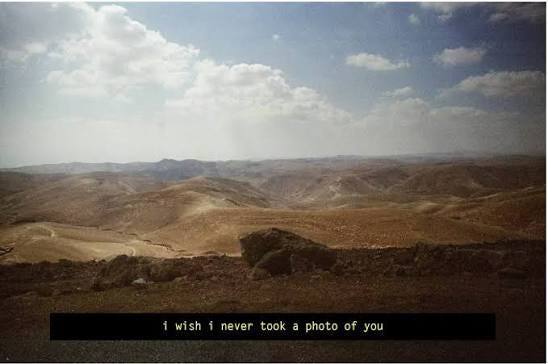
On Love and Other Landscapes takes the form of a photo album. Overlaid text creates a narrative of departure and failed relationship: the end of a love. But the subtext is the Israeli Wall. The landscapes are heartbreakingly beautiful. The blue sky and red rock, the long vistas are marred by the scars of war barrage and colonization.
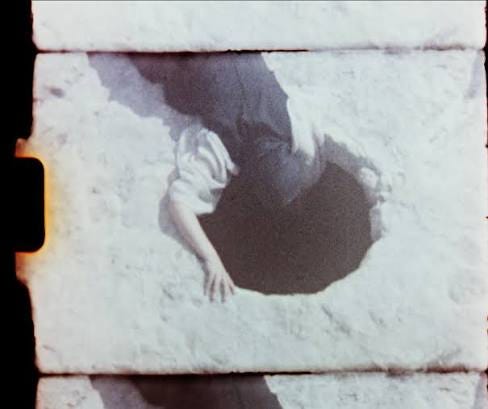
Our songs were ready for all wars to come begins with a similar red rock landscape of caves and buttes. Where On Love used the structure of the photo album, travelogue and “Dear John” letter, our songs goes into mythic territory. Employing super 8 film and choreographed scenes, the film is a reminder that folklore is the voice of the earth speaking through a culture. Water holes and wells in the desert are places of power. In one of the most arresting images, a group of Palestinian women lay on the ground on their bellies, staring into holes in the sun drenched earth. Subterranean knowledge and the power of the matriarchy animate the image.
The third film The Bunker, The Barracks and the Base takes a more documentary form, but it is fragmented into a three channel installation. The film tells the story of a series of hidden bunkers built in south Lebanon by the British and French during the second world war. The bunkers were abandoned after the war. For a time they were a space where children played. A plan to make it a cultural center ran into the Israeli occupation. One of the more arresting lines from the film is “the bunker was hidden under olive groves for decades, the bright paving stones built to make a cultural center led the bombs directly to them.” The bunker then became a notorious prison where locals were tortured. In some sequences, former prisoners tour the ruins of the site that is still filled with gruesome contraptions of torture and occupation.
The three films taken together manifest an image of a beautiful and battered land. The Earth is so present and material in all the films. From the lover’s loss in the first film to the folkloric memory in the second and finally the broken bodies of former prisoners, the cost of unfettered aggression is ever-present.
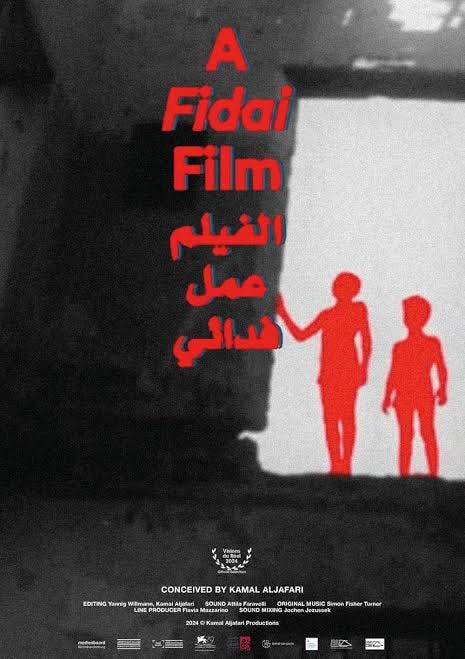
The second half of the evening was taken up by A FIDAI FILM (2024) directed by Kamal Aljafari, a Palestinian filmmaker. The film is comprised of footage looted from a Palestinian archive in 1982 by Israeli forces. In 1982 when Israel invaded Beirut, it destroyed civilian homes, obliterating infrastructure. The Israelis raided a building filled with Palestinian historic archives. There are films of boxes of files and films being loaded into military vehicles. This attempt at erasure; physically in the form of the bombing and destroying memory in the theft of historic documents forms the basis of the film. Employing intercut images, text and historic footage, Aljafari redacts certain phrases and images with a neon, blood red mask. The soundtrack is a low ringing, a dread inducing harbinger of incoming destruction. As the film moves from the bombing of the city to scenes of giant rubble on the seashore, the bone weary sickness of incalculable loss sets in. This was a city, a home to generations. Woven into the archive are films for Israeli propaganda and home movies. One sequence of women trainees for the Israeli army wouldn’t be out of place in a Nazi training film. I will let the irony, if that is what it is, sit there. One other repeated image haunted me: a woman whose scream is silent wailing in the rubble of her destroyed apartment building.
I couldn’t really speak after that. I didn’t have the capacity to ask any questions during the Q&A. Francois and I walked to the metro station in the warm summer night. Neither of us said much. We stopped at a new middle eastern restaurant, a testament to the rich culture in Montréal of immigrants from all over the world. Where I began this exploration searching for my own ancestral roots through Québécois history, I encountered a multivalent, cosmopolitan city; full of immigrants from places with complicated histories. From the proselytizing of the French who came to convert the Indigenous populations and those varied and rich nations that held and were beheld by this land, and still speak its language to the waves of immigrants as brick buildings and ports grew, I felt that this, like many cities imperfectly holds all the traumas, grief and joys of hybrid convolutions. We reached our station, still too tired and emotionally rung out, I noted the huge crowds congregating around a series of outdoor stages throughout downtown. I was seeing that evening’s edition of Francos de Montréal, a month long, free music festival celebrating Francophone music. The city turns downtown into a summer party where all are invited. None of this is simple or easy. All earth holds memory. We walk on its scars and like uneven terrain we feel the contradictions in our strides. It is art and music that processes these uncomfortable truths. Not to provide answers, but to honor and be alive to each other.