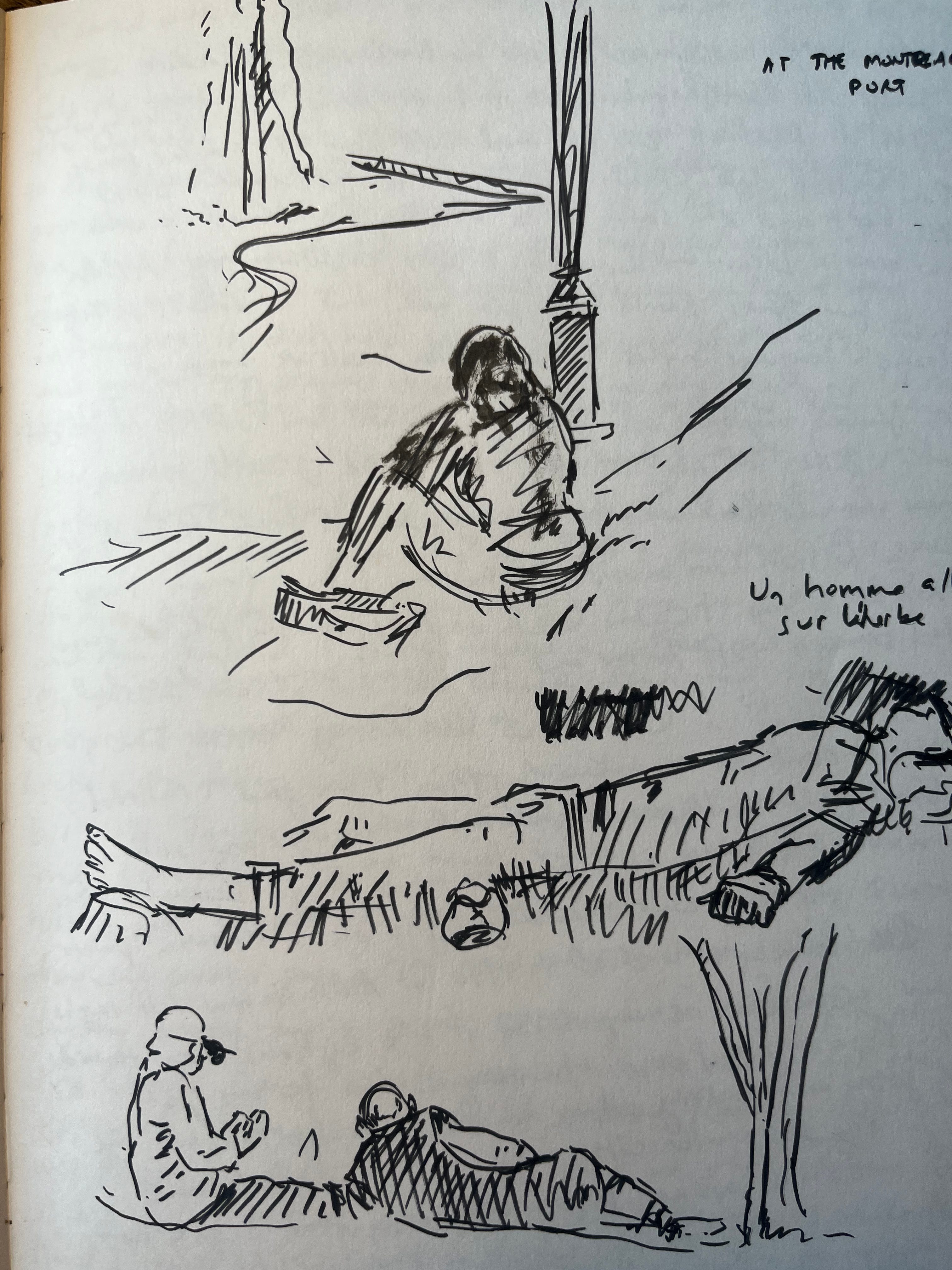
Montreal Dispatch #1
A little history, Old Montreal and French Canadian roots

I have been home for a week from my trip to Montreal. My first intention was to write a single dispatch connecting all the experiences an d encounters from the full week. Thanks to my hosts artist Francois Morelli and curator Diane Charbonneau, I was immersed into the rich art world of the city from the first day. It soon became clear that I would have a lot to digest. I arrived with only a vague idea to connect with my French Canadian ancestry and maybe meet with artists and curators in the city. I wasn’t sure where the entry points would be for that community. My initial research was very helpful for contextualization. However, things didn’t really coalesce until I was on the ground. I encountered a richer, deeper city than the uncertain vision that emerged from my preparatory reading.
I will admit, I tend to fall in love with certain places when I visit. This felt different. Usually, I am a floating interloper, an outsider plunked down into a history not my own. Here, I have ancestors that go back to the earliest days of New France. Growing up in Connecticut, I was told that we were French Canadian. We didn’t speak French other than a few phrases and traditional dishes. The remnants of French Canadian culture didn’t always make sense as a whole. Being in Montreal, so much about my roots became clear. As a result I began to make sense to myself in a way I rarely feel.
This will be the first in a short series of dispatches from my trip to Montreal. Rather than write these chronologically, they will be connected thematically. This first dispatch will be the sketchiest of overviews to give a sense of the layers of history whose life force still presses on the city’s living soul. Later dispatches will be reviews and overviews of contemporary art exhibitions, reviews on performance art and theater performance, the presence of contemporary Indigenous art and culture and the influence of immigrants from the Middle East, Africa and the Caribbean.
Montreal is an island bounded by the St. Lawrence River. Long before Europeans arrived, the island of Montreal (Tiohtià:ke in Mohawk) was an important meeting place for several First Nations. The island occupies a bend in the river and is topped by a small mountain; Mount Royal from which the city derives its name. The first French settlers to arrive in what is now Montreal had the very specific goal of Christianizing the Indigenous peoples of the region. Unlike more commercial colonizing ventures in Quebec City and Trois Rivières Montreal started specifically as a Catholic project of proselytizing. Soon though, its fortifications and proximity to river trade brought more activity. The city grew as an important anchor in New France. During the Seven Years War (locally called The French and Indian War), Montreal fell to British forces in 1760. Soon New France was folded into the British Empire. The French refused to give up their language or Catholicism. For two centuries, English and Scottish families controlled the resources while suppressing the rights of French Canadians. My own family emigrated to the United States in a couple of waves. One part of the family were Acadians. They were violently displaced from their lands and expelled to distant points in the British empire. Some ended up in New England. Another wave arrived in the late nineteenth century due to poor working conditions and a crashing economy in Canada. This population coalesced around the mills and factories in New Hampshire and Massachusetts. Like their relatives left in Canada, the French Canadians (really Franco Americans) maintained tight Catholic French enclaves. Jack Kerouac, not much older than my parents, was part of this community. His novel Visions of Gerard tells the fictionalized story of the death of his beloved older brother at a young age. The novel tenderly sheds light on the French community of that time.
Montreal, until the sixties was the commercial hub of Canada. It’s port moved agricultural products and other goods from the interior out to the Great Lakes and to destinations further. It was a working class city. Francois and Diane explained to me that upper and lower class were literally enacted in Montreal. The lower the ground and the closer to the ports were the lower classes. Moving up to the higher points towards Mount Royal meant an elevation of class and status. The working class nature of the city is beautifully illustrated in Gabrielle Roy’s novel Bonheur d’occasion or The Tin Flute in English. The neighborhood of Saint Henri during the last days of the Depression and the beginning of World War 2 was a rough but close knit community.
During the 1950’s and 1960’s Québécois separatist groups began to form. The French population began pushing back against Anglophone suppression and the control of the Catholic Church. After the 1960 election the population became more secular. In what is now called The Quiet Revolution, the province of Quebec began programs for the social safety net and nationalizing industries. Separatist groups, some inspired directly by global revolutionary projects such as the Cuban Revolution, began agitating for secession from Canada. Some of those groups were violent, such as the Front de Libération du Quebec (FLQ) and others less so. The Parti Québécois won in elections in 1976. This began a push for French to be the official language in Quebec. In 1980, a referendum made Quebec officially French first. Anglophone businesses began to migrate to Toronto, which is now the banking capital of Canada, a distinction Montreal once held. Many of those stately banking buildings hold court in Old Montreal. But Montreal remains a cultural powerhouse.
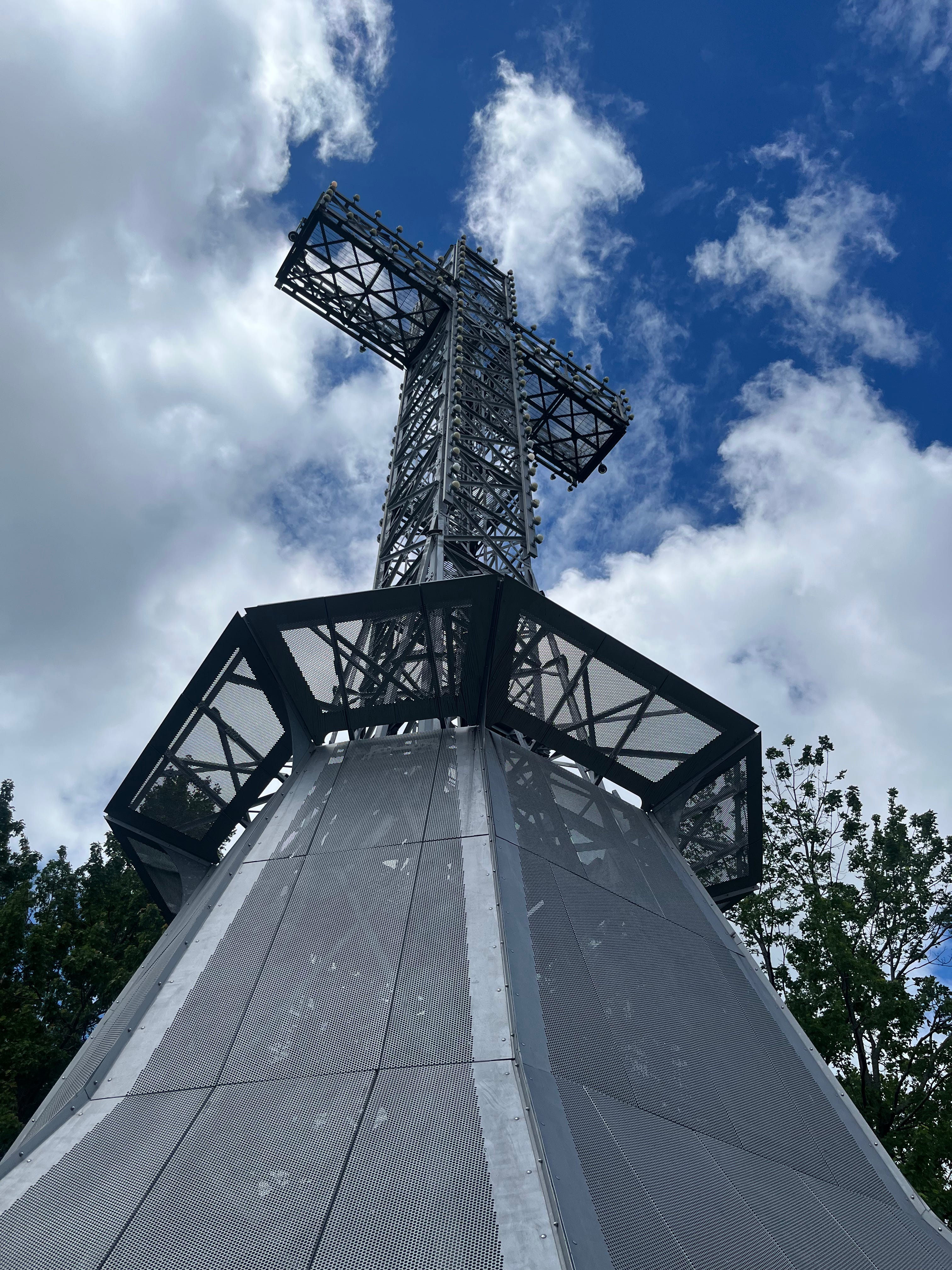
What I have laid out above hardly touches the surface of the city, but I think it is helpful for some historical context. On my third day in Montreal, after a previous day walking through torrential rain and going to three museums and a theater performance, I decided to go for a walk in the woods. I wanted an overview of the city. I took a Metro and a bus to Belvédere Kondiaronk, the highest point in the city on Mount Royal. In the nineteenth century as wealthy families continued to build higher and higher, the city recognized the need to preserve something of the remaining woods. Frederick Law Olmstead designed a park with hiking trails around the high point. The whole city is visible from this point. It is named after Kondiaronk, the orator and chief who signed the Great Peace of Montreal in 1701 between the French, the Wendat and Iroquois. It is also the site of Denys Arcand’s 1989 film Jésus of Montréal. From here, I can see the land that shapes the city, the bend in the St. Lawrence, the rises and valleys and the overlay of industry and commerce. On top of Mount Royal stands a massive cross with bright lights. It is visible from almost anywhere in the city. The cross makes appearances in several films and books, including Dany Laffiére’s How to Make Love to a Negro with Getting Tired or in its original French title; Comment faire l’amour aves un Nègre sans se fatiguer. The cross becomes a beacon from the tenement window of the main character’s apartment.
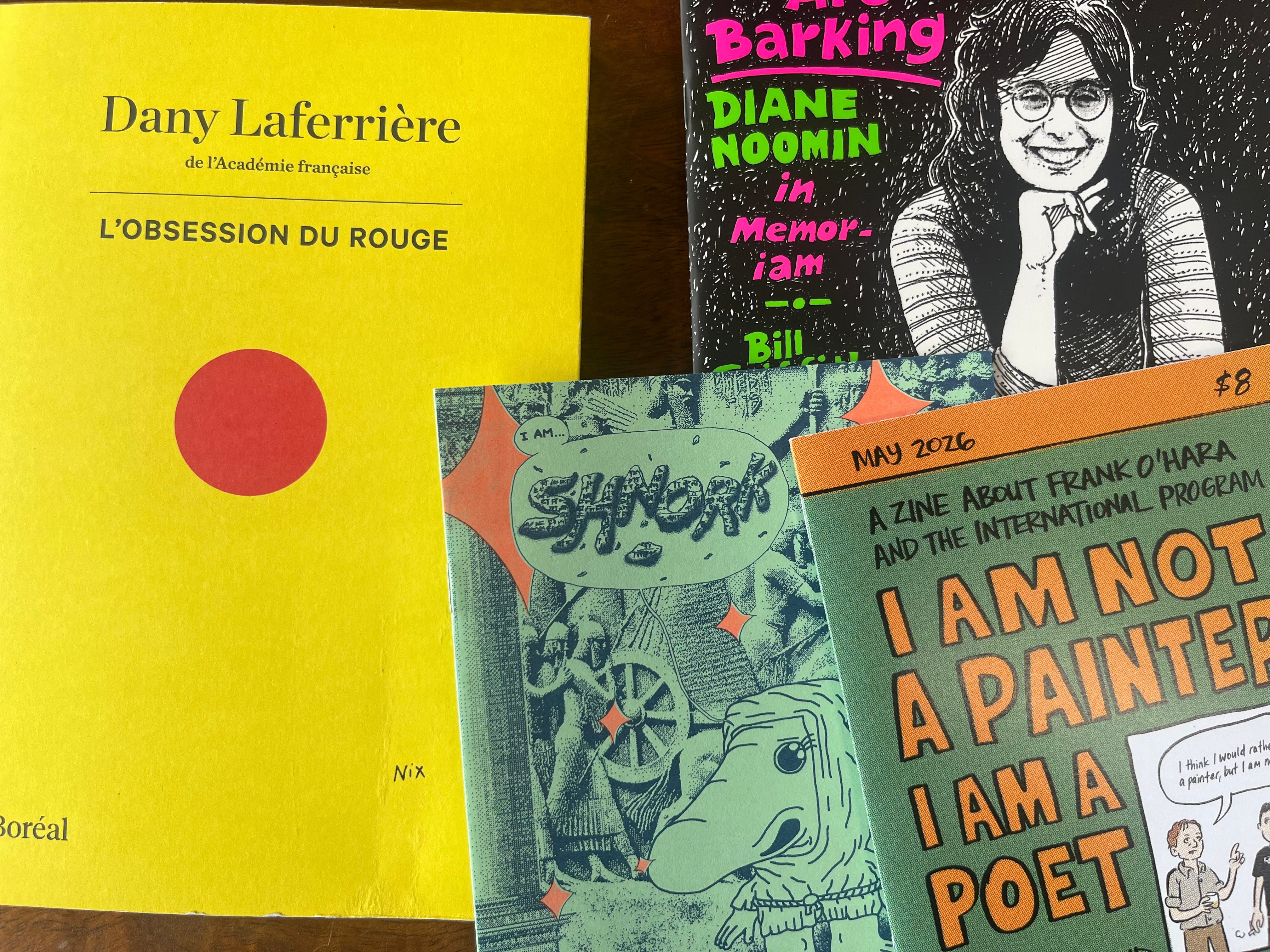
I walked down Chemin Olmstead through forests and meadows, past runners and walkers, bird watchers and picnickers. Eventually I came out into the city not far from Leonard Cohen’s old haunts. I made my way to Librairie Drawn and Quarterly. I was very excited about this visit. Drawn and Quarterly has been producing some of the greatest works in comics since the late eighties. It is a great bookstore, but since I live in a city lousy with great comic shops, most of the English title books were available to me in Portland. I did manage to get my hands on Dany Laffiére’s new book of drawings and writing L’obession du Rouge. After a great conversation with two of the guys at the store I found a few zines fresh from the Toronto zine fest. At that point, I was très fatigué.
Montreal is a city not unlike Paris or New York whose literary avatar is rich and varied. It is a bookstore town. I was able to find some great Québécois writers in stores like Librairie le Port de tête and Librairie Bertrand. Even though my French is still embryonic, I wanted to find books that I could only find there. Call it aspirational reading. I loved speaking in French even if I could only get one or three sentences in. Something stirred in me when I would connect in French. I have a long way to go however before I am fluent.
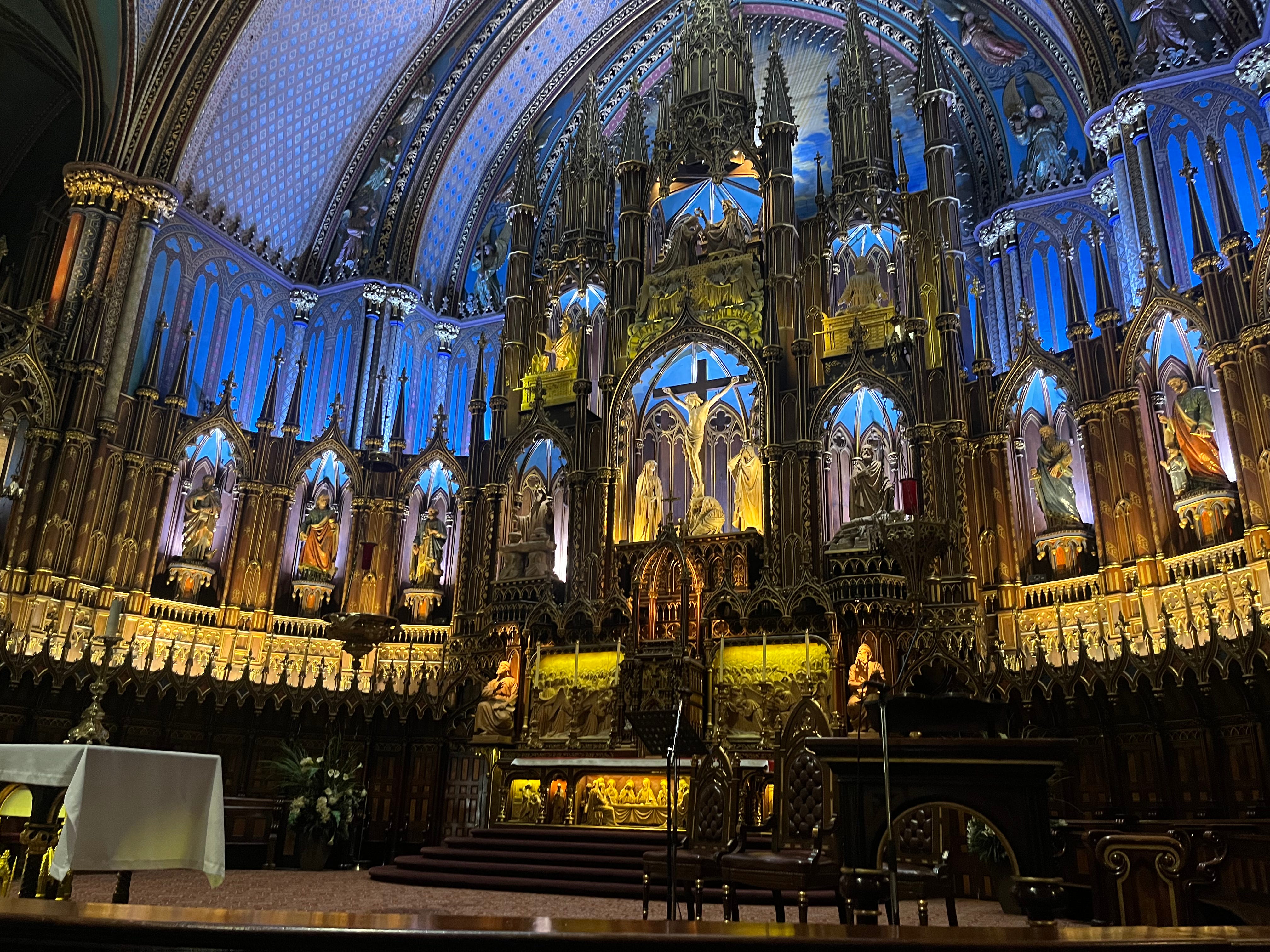
The next day, I decided to head right into the ancestral and historical. I started in Old Montreal at the Notre Dame Basilica. The site had been used since the city’s founding as a church but its current form was completed in 1830. It is a magnificent church. I have my own problems with Catholicism but it is what I was raised in. A sacred space is a sacred space. It was a good place to begin my day– not in the secular but in the sacred. Aside from the vaults and the decorative elements (all stunning), the paintings flanking the interior tell the stories of Indigenous conversion and French Canadian martyrs. It is a friction I feel in such places. I lit a candle for my parents and sat in the pew. I wanted to see if Jesus had anything to say to me. I’m still a stranger in these spaces, a way I felt since I was a kid. I loved the holiness of the building.
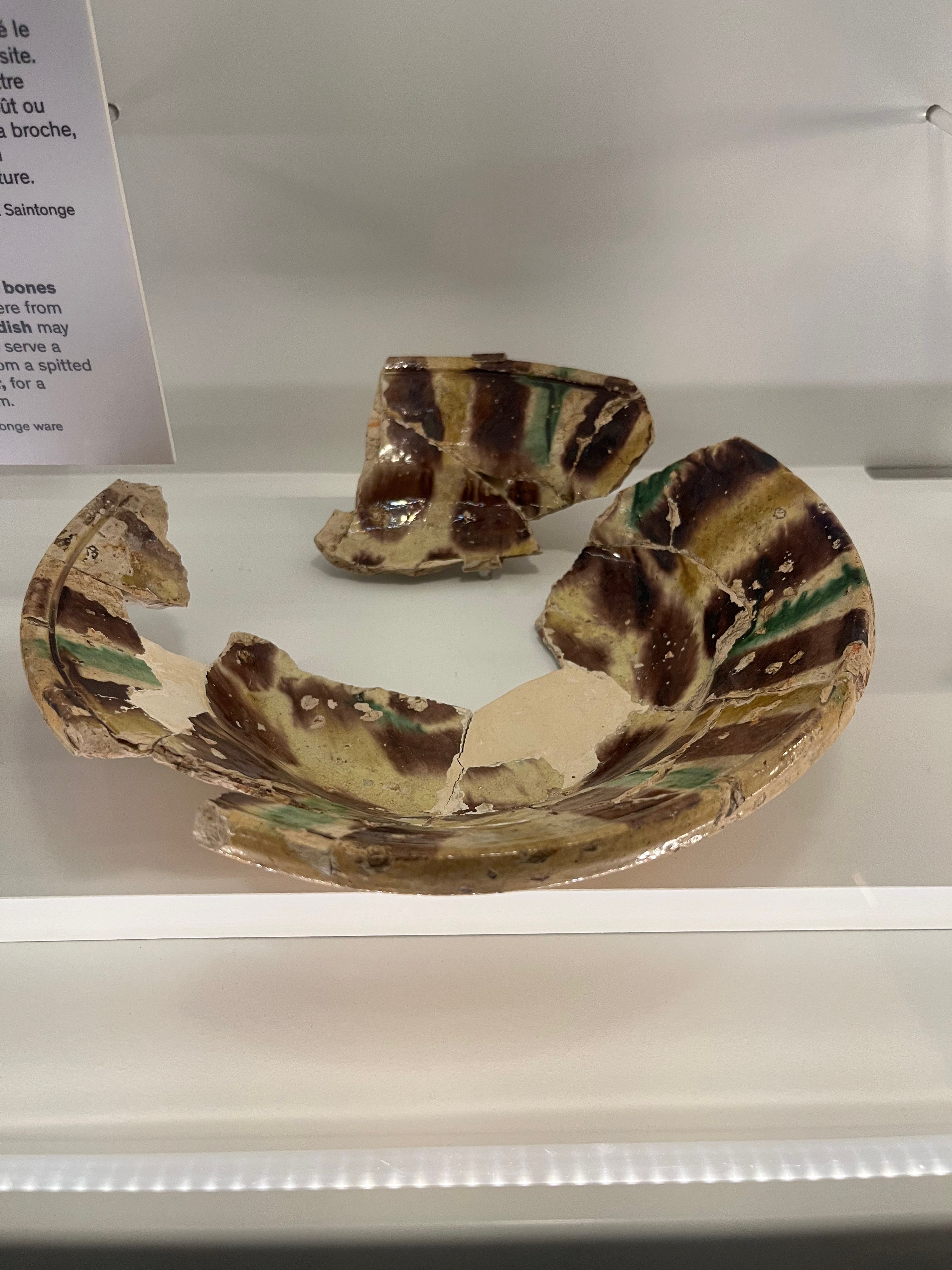
Back out in the bustling street, I made my way to Pointe-a-Calliere the archaeology and history museum that stands atop the original fort of Montreal. The museum takes you through an original sewer pipe that connects to the Little River, a tributary of the St. Lawrence. It is the oldest collector sewer in the Americas. With dioramas, artifacts and digital projections, it brings to life the original fort. It gives context to the Great Peace of Montreal only hinted at the day before on Mount Royal. The best part is the glass floor over which you walk on the archeological dig of the original fort. You can see early Huron campfires, original rooms and the remnants of the first trading post. One criticism is the over reliance on digital projections, including a couple of displays where life-sized digital renderings of historic figures would answer your questions. Total uncanny valley. When I said earlier that I began to make sense to myself, this was one of the sites where something grabbed me. In a display case of unearthed artifacts were two earthenware bowls, cracked beyond repair, hardly enough to see what it looked like. I recognized that as the bowl form and glaze treatment that I often turn to in my own work. There was an instant kinship between this unknown maker and my own ceramic sensibility.
I ended my day on the river. I had planned to go to Boucherville, a suburb of Montreal. My cousin sent me information on a park which is the site where the first Duford is known to have come to the Americas in the early 1700s. However, Boucherville is a Metro and two buses ( an hour travel both ways). I figured any ancestral spirits would understand that what I would be doing is just standing in a suburban park. I made a split decision to find a tourist sight-seeing boat since I was at the port. I booked one for happy hour. Soon I was on the river looking at the city from the water, on the other side of the view from the day before on the mountain. It was an excellent way to sense the original land underneath the city. Layers of industry and history flowed by: the old port, the new port, Expo 67 and the 1976 Olympic Stadium. Old enclaves and new developments pressed against each other. Between those two days I felt a sense of the shape of the land (as best one could do in a week). It is here that I will leave this first dispatch. It was a lot of compressed history I know. Montreal is a city that wears its history, its present and its future on its sleeve. The next dispatch will be entirely about the contemporary art I encountered.